expr:class='"loading" + data:blog.mobileClass'>

Thursday, April 24, 2014

Oregon Craft Beer: Statistics and Damn Lies

Like it or not statistics and damn lies are part of the craft industry. Maybe the damn lies part of it isn't a big thing, but paying attention to stats has become part of the game as the industry matures. Mark Twain would be proud.

Some of the more interesting stats on Oregon beer are out there for pubic consumption on the OLCC site. There you can look at monthly reports documenting production numbers for the state's breweries. The reports are a few months behind. February 2014 was just published.

It's the Year-To-Date comparisons that tend to interest me. That's what we're looking at here. Who's showing a significant increase or decrease. To get that view, you have to pull up reports a year apart. Looking at the side-by-side numbers can be daunting. Visuals are a lot easier. So I created some charts.

Figure A
The first chart looks at percentage change in production among the top 20 or so breweries in the state. This is a meaningful visual in some sense because it tells us what's happening at the top, where most of the volume lives. It's a big part of the overall picture.


You have to be somewhat careful because some of these numbers can be deceiving. Why? Because they're relative. For instance, Worthy's spike looks huge. But the 208 percent increase represents just 510 barrels. By contrast, the CBA's 25 percent drop represents 3,721 barrels. Enough said.

Another thing to keep in mind as you look at this chart is I eliminated breweries with small changes for the sake of easy viewing. Deschutes production dropped by roughy 2 percent, representing 215 barrels. I didn't include them. I also didn't include Rogue, down 1.14 percent, or Full Sail, up 1.66 percent. These to me are insignificant numbers.

The takeaways? Worthy and Breakside obviously show big growth. Breakside opened a production brewery in 2013; Worthy was just ramping up production. They're both gaining production momentum now. As noted, keep in mind that these numbers are relative. Worthy and Breakside aren't the biggest winners when it comes to increased production volume (see below).

I have no idea what happened with the CBA or Bridgeport. Ninkasi's drop may be related to efforts to increase capacity. Laurelwood's drop makes sense because they have shifted a lot of production to Redhook's facility in Woodinville, Wash. They're still brewing Workhorse, Free Range Red and others for 22 oz bottle distribution, but the heavy lifting has mostly shifted.

I should mention a couple of notable exclusions. Pelican, Good Life, Baker City and Ecliptic show no numbers of February 2013 so nothing to compute growth. Ecliptic wasn't yet open. Pelican and Baker City have shifted to production breweries that didn't exist a year ago. I do not know what happened with Good Life...a missed report, perhaps. Their production is up significantly since early 2013.

Figure B
This may well be the more meaningful chart due to the fact that it shows actual volume increase or decrease. I only paid attention to the biggest changes to keep it simple, so you're only looking at breweries where there has been significant up or down movement. 


I probably should have left out the CBA; that one data point skews the grid dramatically. Hop Valley shows up as a loser here because they shifted to a production brewery and downscaled production at their pub. Ninkasi, Bridgeport and Laurelwood I've mentioned. 

In terms of the shops showing growth, I suspect Boneyard would have shown a greater increase, but they're maxed out where they are. Worthy and Breakside, as noted above, are what they are. Fort George is moving up quickly, Portland Brewing is a big surprise. They must be contract brewing something. Perhaps someone will chime in about that. Pelican, Good Life, Baker City and Ecliptic surely would have shown up here had there been 2013 data to compare.

A final caveat here is that volume doesn't necessarily equate with profitability. Producing a product that makes a good profit involves more than just brewing a great beer. There are branding and marketing issues that play into that. Some breweries make more money by keeping production and distribution down. Food for thought.

Figure C
This last chart was a sort of afterthought. There are a number of smaller breweries out there that are growing rapidly. I thought it would interesting to look at them in context of each other. As in the first chart, we're talking about percentage increase, not volume.


To be considered, breweries had to have at least 100 barrels of YTD production in February 2014. I did that to eliminate places that brewed, say, five barrels a year ago and are now brewing 10 or 20. That growth is significant for them, but insignificant in the larger scheme of things. Breweries also had to show 20 percent growth or more.

There's nothing that surprising here. Pfriem is a rising star, for sure. The Commons, as well. Gigantic has been solid since it launched in 2012. Base Camp is a bit of a surprise, but they're apparently doing just fine. I should mention that Rusty Truck, Sky High and Sasquatch snuck into the mix at or just above the required 100 barrels of YTD production in February. 

Relevance
These charts are offered strictly for comparison and information. They do not tell much more than a partial story. Craft beer in Oregon is in a constant state of flux and the numbers for these breweries will likely shift around fluidly as the year moves along. 

I'll try to remember to update these charts in five or six months, when the picture for the year is a little sharper. Well, maybe it will be.

Update: A few people have contacted me pointing out that OLCC numbers reflect beer produced and sold in Oregon. Keep that in mind as you view these charts. I can certainly think of breweries who are selling a lot of beer outside Oregon, production that does not show up here.

Monday, April 21, 2014

When Brewers Go Right and Wrong on Price

Even though there's a lot of beer talk here, I tend to shy away from writing beer reviews. I'll mention beers I think are worth trying at a festival or brewery or pub. I'll usually list stats. But I seldom ramble on about any particular beer. I don't read such drivel. Why should you?

Value is another issue altogether. If there's something out there that's a great value vs something that isn't worth the cover price, that's information worth passing on. I discovered a couple of examples this past week.

The Good
I haven't generally been thrilled by Fort George Brewing beers. Admittedly, I haven't tried them all. The 1811 lager is the only one that comes instantly to mind as memorable. So I didn't have high hopes for Suicide Squeeze IPA, a current seasonal. I figured it for just another hoppy pale ale.

I bought a can of Suicide Squeeze at New Seasons the other day. In a glass, the beer has a vibrant orange hue and is slightly cloudy. The aroma is decent, but the real punch is in the deep citrus flavor...Mosaic and Citra hops. At 4.5% ABV, you can drink a few pints of this light-bodied hop bomb without getting floored. Perfect for warm weather...or right now.

Just as important, Suicide Squeeze is one of those deals where you're getting great value. At $2.49 for a 16 oz can, you can get a couple of these for the price of a 22 oz bottle of many IPAs. I think I'll be adding it to the list of beers to keep in my fridge for summer.

The Not-so Good
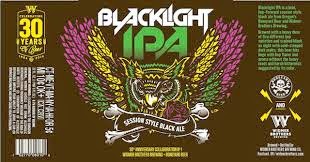
A lot of people were excited when Widmer announced that it was collaborating with Boneyard Brewing on one of their 30th anniversary beers. Blacklight IPA, the first of six collaboration beers to be released this year, appeared in early April.

This is a collaboration that makes a lot of sense. Widmer derives some PR benefit by connecting with the darling of Oregon's craft beer scene. Boneyard is so popular they can't keep up with demand for their beer. Hooking up with them is good for Widmer's image...makes them look like cool Slayer kids.


Boneyard benefits by associating itself with one of Oregon's founding breweries...one that also happens to have available tank space and deep brewing knowhow. It also gets packaged beer into retail stores for the first time. That's great exposure as they prepare to expand production and, just maybe, start bottling or canning on their own.

I had Blacklight the other night at Belmont Station. It's all Boneyard in the nose, brilliantly dry-hopped and fragrant....exactly what you would expect. Then the bottom falls out in a finish that's flat as a pancake. Blacklight packs 4.2% ABV. It's dark, but not malty. I loved the aroma and was disappointed after that.

Just to be clear, Blacklight isn't a bad beer. It's a sessionable black ale with a great aroma. Some people like that. The problem is the price. Bombers of this stuff are $8.49 at New Seasons. Seriously? It's a fancy bottle and all, and I realize production and distribution are limited. But this is a ridiculously overpriced beer.

Widmer has some expertise in this area. Their reserve series beers are pricey. Last year, they collaborated with Cigar City Brewing on the barrel-aged Gentlemen's Club series. Those beers were expensive and didn't move all that well. Many retailers who still have bottles have resorted to discounting to get rid of them. Not the best.

There's another one of these collaboration beers coming in May. This time, Widmer is teaming up with Breakside, another of the hottest brands going in these parts. I suspect the beer will be fine. Price is another matter. If it's another light style in the vein of Blacklight, the price ought to be in the $4 to $6 range. Otherwise, it's probably not a very good value.

As a kid, I sometimes bought cheap junk that disintegrated in short order. My dad would say, "You get what you pay for." There's some truth to that adage even with craft beer. Cheaper isn't always or even usually better. But value is value. And paying too much for any beer will get you buyer's remorse.

Friday, April 18, 2014

AB's Pricing Counteroffensive: The Sequel

Monday's post on Anheuser-Busch's latest effort to undermine the craft beer movement struck a chord with many readers, and also a few nerves. The story was shared on reddit.com and wound up getting hammered to the tune of more than 20K page views. Uncharted waters.

Since Monday, the Beer Business Daily has released some updated information on the rational behind the pricing strategy, as well as what's actually happening and what some industry people think about it.

The Angle
Anheuser-Busch has really nothing to lose with the $56 keg pricing in Washington and Oregon. Both are low share states for AB products. Plus, most of the volume sold as part of this promo is going through AB-owned distributors, which means they can spread the costs broadly. Very few independents are involved, as predicted.

With respect to brand equity damage, it may not happen. Many retailers will simply keep prices where they are and pocket the extra profit. If there's no discounting at the tap, consumers who don't read blogs like this one won't know what's going on and the brands involved (Shock Top and Goose Island) won't suffer any equity damage at all...beyond their affiliation with Anheuser-Busch.

As expected, the strategy is getting very little traction in craft-centric bars and pubs. These places aren't interested in offering marked down, marginal craft brands. Their customers would balk and walk. So most of the action is in mainstream accounts, which can make a few extra bucks selling stuff they already sell.

Risk for Craft
There are those in the industry, some quoted in BBD, who believe AB is testing the discounting strategy to see how many tap handles can be acquired. If successful, the strategy may be expanded. The way it becomes a problem for craft brewers is if AB is able to undercut pricing to the extent that retailers start demanding similar pricing from craft brewers.

Anheuser-Busch, if it wanted to, could broaden the effort by producing quality beer, which it could do at a fraction of what it costs craft brewers. That seems unlikely. Keep in mind that AB is not particularly good at brand building. Most of their strategic edge is wrapped up in efficiency. They are ruthless cost-cutters, not brand builders.

What they would likely do to expand the discounting campaign is acquire more craft brands. Once they have a controlling interest, they would dump that beer on the market at discounted prices as a means of pushing prices downward and sucking some of the profit out of craft beer. That's what they're doing with Goose Island and the strategy could be repeated.

In the end, any effort to undercut price will require time and coordination. Winning a few tap handles with cheap beer isn't going to do much, except maybe produce some local or regional price wars. For the strategy to work, AB will have to make a concerted longterm effort to undermine the profitability of craft beer. That's the risk for craft brewers, but you have to wonder if AB is up to it.

Goose Island
Some readers didn't like me lumping Goose Island with Shock Top. Oh well. The problem for Goose Island is that it is a wholly owned subsidiary of Anheuser-Busch. The once respected, independent brand is now nothing more than a pawn in AB's efforts to address declining market share. Right alongside the dreadful Shock Top.

Honestly, I've never had a Goose Island beer that was above average. The bulk of the Goose Island beer we see in Oregon is surely mass produced by AB. The highly sought-after Bourbon County Stout is rare and I haven't had it. However, I had their Illinois Imperial IPA last night a Belmont Station. This is not a standard issue Goose Island beer. It was okay, nothing more.

Happy Friday!

Monday, April 14, 2014

Anheuser-Busch's Latest Counteroffensive: Pricing

As craft beer continues to see growth, it's hardly a secret where the increased market share is coming from. Big beer's so-called premium brands continue to take a beating. As documented here and elsewhere, they aren't taking this situation laying down by any means. They want your money.

Indeed, big beer is working against the growth of craft beer in all kinds of creative and not-so-creative ways. They've gone in and manipulated laws in some states...or they've used loopholes in laws to their advantage. They're fighting against growlers in some states. In others, like Oregon, they're buying up distributors.

Then there's brand confusion, where big beer creates fake craft brands, which they then promote as the real thing via spendy marketing campaigns. The beers don't fool knowledgeable craft beer fans, but they do create enough brand confusion to reel in some new drinkers.

Now there's news that Anheuser-Busch, big beer's biggest bully, is launching a new counteroffensive based on price. The story was first reported in the Beer Business Daily the other day. I don't subscribe...too expensive. But I've received several messages from industry sources filling me in on what's happening.

It seems AB distributors in parts of Oregon and Washington (the reach of the campaign is uncertain) have issued updated price lists containing massive price drops on the Shock Top and Goose Island brands. Kegs that were previously selling to retailers for about $110 per half barrel will now be priced at $56. That's not a misprint. No word on pricing for packaged versions of those beers.

Inquiring minds may ask what AB is up to. Well, it appears they will attempt to use loss leader pricing to gain control of tap handles wherever possible. The low hanging fruit likely includes meat markets where the clientele often likes to drink a lot on the cheap. Buffalo Wild Wings and Blitz come instantly to mind, but they aren't alone. These joints could offer $3 pints of Shock Top or Goose Island around the clock and still make money.

What we clearly won't see is Shock Top or Goose Island taking over any handles at aficionado spots like Belmont Station, Saraveza or BeerMongers. Fat chance. The buyers in those bars would rather have their blood drained by vampires than serve charlatan craft brands to customers. It's not gonna happen...though I do like the juxtaposition of vampires and Anheuser-Busch.

Then there's the distributor angle. How could a distributor offer pricing like this? Even with backdoor subsidies in the form of reduced prices, discounts on shipping or increased advertising support, this kind of pricing would put independent distributors in a bind. Of course, many, possibly most of the distributors offering this pricing are wholly owned by Anheuser-Busch. They have to sell this sludge no matter what. So much for the three-tier system.

There is definitely some consternation on the part of MillerCoors distributors, who are independently owned and generally more interested in growing craft brands than in collapsing them, like AB. They wonder what predatory pricing on Shock Top and Goose Island will do to gateway brands like Blue Moon and Third Shift. They don't want a price war. But maybe that's what they have for now.

Look, the obvious goal of AB's initiative is to gobble up as many tap handles in as many places as possible. It's a rear guard action. These handles are apt to be in joints frequented by a lot of gateway drinkers. Hardcore craft bars aren't good targets. Once they have the business, prices of Shock Top and Goose Island will gradually increase.

It's a cynical strategy. What did you expect? It's your money they're after. That's what they've always been after. All that's changed is they've lost control of the narrative.

Wednesday, April 9, 2014

Rooney's Rainier Ads Foreshadowed Changing Times

The passing of Mickey Rooney the other day took me back to the 1970s, when he was frontman for one of the most creative ad campaigns ever launched in the beer industry. Forget the beer for just a moment. As a high school and college student, the ads made me want to like Rainier. But I couldn't manage it.

You recall the ads, of course. In several, Rooney is the leader of a team of hunters chasing Mountain Fresh Rainiers in vaguely mountainous Northwest settings. The group comes close, but never quite manages to corral or "pop the top" of a wild Rainier. Probably just as well.

The Rooney ads were part of Rainier's campaign to bolster its brand. For many years, Rainier ads graced TV, print and radio. They featured goofy, but highly memorable characters and themes. There was the running of the Rainiers. a parody of the running of the bulls in Spain. Long before Budweiser used talking frogs, Rainier used them to croak, "Rain-Neer, Rain-Neer." And who can forget the motorcycle that revs "Raaaaaiiiiinnnnn-neeeeeeeeerr-beeeeeeeeeeer," as it passes?

Rainier spent a lot of money on these ad campaigns. Inquiring minds may wonder why. It's pretty simple. All the regional brands, which in the Northwest included Rainier, Olympia, Lucky Lager and Blitz-Weinhard, were under siege by the national brands by 1960s. It was sink or swim by the early 1970s. Rainier was trying to swim.


You may wonder what could have happened to put the regional brands in such peril. For those who still read and want to know more, I suggest The U.S. Brewing Industry: Data and Economic Analysis, by Victor and Carol Tremblay. You may find it in your local library...or you can buy it on Amazon for a few bucks.

The basic facts are these: In the aftermath of Prohibition and World War II, the national brands, represented by Miller, Budweiser, Schiltz, Pabst, had gained significant advantages in production, distribution and brand recognition. Those advantages provided cash flows that enabled them to spend freely on advertising, particularly TV advertising. Television, you may recall, was entering its golden age about this time. A wacky fact I ran across last year: In 1952, the big four national brewers accounted for 84 percent of network advertising revenue. That's a shocking stat, no matter how you cut it.


By the early 1970s, the regional brands were on the run, faced with dramatically declining market share. They fought back by launching regional ad campaigns, of which Rainier's was arguably the most creative. Across the board, these campaigns bought the regionals some time. Not much more.

Portland oldtimers will recall that Blitz-Weinhard took a slightly different tact. Its launch of Henry Weinhard's Private Reserve in 1976, combined with a folksy ad campaign, was an effort to maintain market share in the face of onrushing national brands. One might argue, as I have argued, that Private Reserve was a precursor to the coming craft revolution.

Despite the efforts of the Madmen who created the ads that featured Mickey Rooney and others, it all went bad for Rainier. The company, which started brewing in Seattle in 1878, operated in California when state prohibition came in 1916, then returned in 1935, was sold to G. Heileman Brewing Company in 1977. It changed hands a few more times before landing with Pabst, which closed the brewery in 1999. Blitz-Weinhard suffered a similar fate, if you're keeping track.


You can still find Rainier. It's produced in a factory brewery outside Los Angeles. The creative, funny ads featuring Rooney and others, like similar ads fielded by many regional brands in the 1970s, served mostly as a sort of bridge to a period dominated by consolidation and mega brands. Today, craft brewers are moving us the other way, toward a return to mostly local and regional beer. Better times.

Cheers to Mickey Rooney for some great laughs. RIP

Monday, April 7, 2014

Hop Bombs and Blindspots

I sometimes wonder how much our current fixation on hoppy beers is impacting the relevance of competing styles. This question occurred to me after I read Jeff Alworth's recent piece on the importance of appreciating different styles. Relevant stuff.

Then there was my recent visit to Central Oregon. At one point I was sitting in a brewpub enjoying a pint. An older gent walked in and sat down in the vacant seat next to me. He looked at the board and asked if they had anything malty. "Not really," I said. In fact, the only remotely malty beer they were pouring was a black ale. It was not mega-hoppy by my standards, but it was hoppy enough to shock the palate of this gent after a taste. They had nothing for him.

That scenario may not be the norm, but it got me wondering about the current beer landscape. If you walk into a store, taproom or brewery, you are likely to find plenty of hoppy beers on the playlist. That's no accident. These businesses are catering to the masses...and mostly the masses want hoppy beers. That reality means darker styles, in particular, get less attention.

It hasn't always been this way. If you rewind to the early days of craft brewing, brewers typically offered a fairly balanced mix of hoppy ales and stouts. That's how they differentiated themselves from macro sludge. Don't kid yourself, though. The hoppy beers of yesteryear were nothing like the robust IPAs, IIPAs and IIIPAs of today. Night and day difference.

It's pretty clear that hoppier styles have won over the hearts and minds of most modern beer fans. At least for now. Your average brewpub, taproom or store is likely to have multiple hoppy choices for every stout or porter. Go out and do the research if you need to.

I have to admit being part of the growing IPA craze going back many years. I was homebrewing and drinking mega-hoppy beers by the late 1990s. I shifted my attention to a wider range of styles that includes lighter and darker styles as part of widening my beer perspective in recent times. Not everyone feels the need.

The quintessential question is this: Are darker styles being driven into extinction or will there be a backlash to the blindspot that's formed in the shadow of IPA's popularity? Will we ever return to a time when an oldtimer can walk into a pub or brewery and be pleased with the non-hoppy choices?

Something to ruminate about, if nothing else.

Wednesday, April 2, 2014

Widmer Brewing at 30: The Beat Goes On

Thirty years ago today, Kurt and Rob Widmer launched what would eventually become one of Oregon's leading craft beer brands. Through the years, Widmer Brothers Brewing has stayed relevant by producing solid beers that attracted wide appeal. That theme continues on.

Ray, Kurt and Rob Widmer in the early days
There are some special events on tap this week to celebrate Widmer's 30 years in business. There's also the grand reopening of a newly remodeled pub and more. I'll get to the specifics of those events down the line. First, a bit of history, because 30-year-old businesses typically have lots of it.

When the brothers founded their company on April 2, 1984, they had no grandiose plans. They hoped to be able to make a living doing something they enjoyed. Kurt had spent significant time studying the beer market and thought they could carve out a niche. The growing popularity of imported beer convinced him a local product could compete well in that segment.

It didn't take long for Kurt to convince Rob of the potential. They soon recruited their dad, Ray. As construction of their brewery and business moved along, Ray played an important role. He was a farm boy who could fix things and figure out solutions to all kinds of mechanical challenges. That was a crucial skill to have in a brewery cobbled together largely from scavenged parts.

History recognizes Bridgeport as Portland's oldest craft brewery. In fact, Bridgeport founders Dick and Nancy Ponzi, along with Karl Ockert, began assembling their brewery on Northwest Marshall about the same time the Widmers were doing the same on Lovejoy. Bridgeport is considered the oldest because they began selling beer in late 1984. The Widmers got their beer to market a few months later.

The original space on Lovejoy
The success of Widmer Hefeweizen is well-documented. It's a largely forgotten detail that Hef was not their first beer. That honor belongs to Altbier, a bold interpretation of the German style that Fred Eckhardt, then writing about beer for The Oregonian, named "Beer of the Year" for 1985. Altbier remains a favorite of Eckhardt and is also high on John Foyston's list of favored beers. I like it, too.

When it arrived on the scene in 1986, Widmer Hefeweizen was a sort of accident. The brothers had started making Weizenbier (later shortened to Weizen) to provide something lighter than Altbier for customers. Soon, they were asked to make another beer. But they didn't have the brewing capacity to do that. Their solution was Hefeweizen, unfiltered Weizenbier.

Hefeweizen became hugely popular. Good news. Except the boys had not really planned for the kind of growth they quickly experienced on Lovejoy. They had originally hoped to have a pub there, but the brewing operation soon consumed all of the available space. Thus, they wouldn't have a pub until after they moved to Russell St., where they eventually opened the Gasthaus in 1996.


Another thing not generally recalled is that Hefeweizen was draft only for many years. Bridgeport and Portland Brewing, two of the four founding breweries here, started bottling in 1989. Due to some problems with keeping the yeast in solution, Widmer Hefeweizen wasn't available in bottled form until 1996. It's hard to fathom, looking back.

Once Hefeweizen hit store shelves, Widmer experienced a dramatic growth spurt. The move to Russell St. in 1991 had increased capacity, but it soon became readily apparent that they would have to expand again. That was partly what drove the partnership with Anheuser-Busch, announced in April 1997. By selling an interest (27 percent) in their company, the Widmers got money to expand their facilities and access to AB's distribution network. It was an ingenious move, though some didn't like it.

Widmer's business continued to flourish through the end of the decade and early years of the 21st century. They formed partnerships with Seattle's Redhook and Hawaii's Kona Brewing, which subsequently evolved into the Craft Brewers Alliance in 2008 (shortened to Craft Brew Alliance in 2012). Their portfolio of beers has continued to grow.

To celebrate 30 years, Widmer is holding a grand reopening of its Gasthaus pub Thursday evening. Frankly speaking, the pub remodel was overdue. What they've done with the remodel is vastly improve the experience there. The berms that previously separated the booths and tables are gone. Beer taps have been relocated to the wall behind the bar, immediately below placards showing what's on. The feel is much more open and contemporary. Very nice effort, indeed.


Thursday evening's party will feature the first three releases in Widmer's 30 Beers for 30 Years series. They're essentially going back and brewing beers from their 30 years. The first three are Altbier, Weizenbier and Hefeweizen. Perfect symmetry. Each beer in the series will be produced in limited quantity. Thirty cases of each release, packaged in 22-ounce bottles, will be available in the Portland market. Draft will be limited to select markets and, I assume, accounts.

Next up is the launch party for Blacklight IPA, a collaboration between Widmer and Boneyard Brewing of Bend. Blacklight, a session style black ale, is the first of six collaboration beers Widmer will release to celebrate their 30th. The event is happening at Kelly's Olympian on SW Washington St. Friday evening. The party starts at 7:00, with music kicking off at 9:00.

Finally, Kurt and Rob will toast the official launch of Green & Gold Kolsch, a collaboration with the Timbers Army, prior to Saturday's game at Providence Park. The recipe for Green & Gold was the winner of a 2012 Timbers Army homebrew competition, and subsequently brewed for commercial release by Widmer last year. It is being re-released, they say, due to the resounding positive response. This is a pre-game toast...game time is noon.


When you look at Oregon's four founding breweries, it's fairly clear that Widmer has been the most successful. No need to go into any great detail. McMenamin's has a ton of properties, but Widmer beers are sold across the country. Through innovation, diligence and business smarts, the brothers have piloted their company to great success. They remain vibrant and relevant because they continue to pursue the lofty goals they've been chasing all along. The beat goes on.

Happy 30th, guys! Cheers!


Monday, March 31, 2014

Central Oregon's House of Beers Revisited

Since I moved to Oregon 25 years ago, I've made many trips to Central Oregon. Not that many in the early years, but more than a few in, say, the last 10 or so years. These trips aren't normally about beer, though I've made it a point to lean on the beer aspect more heavily in recent times.

Last week's trip was mainly a ski vacation. We loaded up the new Crosstrek with gear, provisions and the two Labs and headed for the Sunriver condo we've stayed in countless times. I sandwiched a day of beer chasing between days of skiing on Mt. Bachelor. It's easier on the body that way.

Sunriver Brewing
My first stop was Sunriver Brewing, conveniently located in Sunriver Village. Perfect spot for a tourist trap. I originally visited this place shortly after it opened in 2012. At that point in time, their beer was being brewed in Redmond. It wasn't bad, but not very memorable, either. There is no space to install a brewery inside the pub, so I wondered what they would do. Honestly, I figured these guys for another Sunriver joke...and I've seen plenty of those over the years.

How wrong I was. These guys now have their own production brewery in Sunriver and they were pouring seven of their own beers in the pub. There are reportedly more on the way. That wouldn't count for much except these are nicely executed beers right down the line. They also had several decent guest taps to round out the list.


Beer choices? Lazy River Lager (5.5%ABV, 31 IBU) might not be your first pick on an unsettled March day, but it's a terrific beer. I also liked Adopt a Trail Pale Ale (5.7% ABV, 35 IBU), which is buzzing with the citrus aromas and flavors you normally find in an IPA, only in a more compact package. Granda's Original Blonde Ale (4.8% ABV, 19 IBU) is another fine effort and a perfect session beer.

This joint is hardly a secret. Travelers and I suspect a few locals have discovered Sunriver Brewing. They've got some TVs for sports fanatics and kids are welcome. Besides the beers, they have a solid pub menu at reasonable prices. Pints are $4.50, $3.50 during happy hour (3:00-5:30 Monday-Friday). A bacon cheeseburger will set you back $11.50 and there are other selections in that range. They fill growlers, too, though you will likely find lower prices down the road at the Mountain Jug.


For a long time, Sunriver was a joke from a beer and pub perspective. You had to drive in to Bend for satisfaction. But Sunriver Brewing changes the game. In a place where so many pathetic businesses have failed, these guys are hitting home runs. They're doing it with great beers, good food and attentive service. The pub was a virtual beehive of activity during an afternoon visit. Yet the wait staff kept up and the barkeeps were pleasant and conversational.

Rat Hole Brewpub
Perhaps the name is related to the fact that Rat Hole's brewery is located in a barn in southeast Bend. That's where Rat Hole began as a family project. Brewer Al Toepfer was an experienced home brewer who earned many awards prior to becoming a commercial brewer. It shows.


The pub is located in the Phoenix West building, which appears to be a in a sort of business park. It seemed an odd location, until I discovered the building has housed a string of eateries and a brewery dating back to 2007. The space occupied by Rat Hole is small, even if you include an outside patio, but apparently sufficient for now. The place opened in July 2013.

There were 10 beers listed on the Rat Hole board. Several of the beers were blown, including Haystack Hazelnut Brown Ale, a popular favorite. Of the beers on my tasting platter, the Lemon Wheat (5.3% ABV, 50 IBU and served with a lemon slice) was brilliantly refreshing. Rat Hole Saison (5.4% ABV, 62 IBU), made with Red Wheat and Cascade hops is pleasantly likable. Rat Hole Rye IPA (6.0% ABV, 71 IBU) is mildly spicy with a citrus kick. The Rotation Red Ale (5.9% ABV, 34 IBU) seemed a little lifeless. The Vanilla Porter (5.5% ABV, 30 IBU), features pervasive vanilla aromas, a soft mouthfeel and a nice chocolate finish.


It's worth mentioning that Rat Hole's food menu is not typical. The cuisine has a Southwestern flavor... tacos, burritos, nachos and such. They also have a token burger and some sandwiches. The burger will set you back $12. I had a set of three fish tacos for $9. Good value, I thought. Some may consider the food here slightly upscale for a pub. Mostly it's just a different, I think.

Rat Hole Brewpub is a worthy stop, for sure. The beers here are well-made and it's an interesting spot. They evidently offer live music several evenings a week and I bet things get a little crazy when warmer weather allows full use of the outdoor space. The gent behind the bar was a former school principal and family member. He could use a little polish, though not bad.

Boneyard Beer
I first visited Boneyard's brewery in Bend several years ago. Things were different then. Boneyard was in high growth mode, but the place was still pretty quaint and charming. The tasting room was home to a pleasant buzz. The heavy metal motif was along for the wild ride.


Things have shifted dramatically for Boneyard in the couple of years since. Their product is in such demand that they're ranked among the top ten Oregon brewers by production volume while selling draft only. Plans to can the popular RPM IPA never materialized. Boneyard didn't have to bother. It hasn't been able to keep up with demand from draft accounts. A nice problem to have.

There's an expanded brewing facility in the works. Production is still in full swing at the brewery on Lake Pl. But the friendly old charm of the tasting room is gone. Well, if it's there, I didn't feel it. The tasting list was pedestrian and the service was crusty. If I didn't know better, I'd guess the success has gone to a few heads. Not really a surprise.


There's more. I've long regarded RPM as a fantastic beer. I knew from a 2011 conversation with Tony Lawrence that he intended to dial RPM down. It's now down to 6.6% ABV (early versions were 7.5%). I had several pints on this trip and it seems to me the current beer doesn't look, smell or taste like the original. Not terrible, but decidedly different.

Look, you can't argue with the success Lawrence and Co. have had. They knew what they were doing from day one and they've built a rabid following. The good times will almost certainly continue. But some of the old charm appears to be gone, lost in a tsunami of demand for their beer and the pains that come with that reality. I understand it. I don't like it.

Monday, March 24, 2014

Got Growler Trouble? Bud Man to the Rescue

Like much of the old south, Florida has some archaic laws on the books. One of the more amusing laws pertains to beer growlers. I've talked about this here before. In Florida, you can walk into a brewery and leave with a gallon or quart growler. Half gallon growlers, the industry standard, are illegal.

Florida's growing craft beer industry wants to fix the law, which evidently dates to the post-Prohibition era. They see the current growler law as an obstacle to growth in the industry, which some observers say might eventually support 500 craft brewers. Growth is in the wind.

Craft brewers have supported two bills, one (HB 283) that would legalize half gallon growlers and another (HB 387) that would allow beer tastings at outside venues like grocery stores and related establishments. The need for bills like this makes you realize how retrograde Florida laws are when it comes to beer. But never mind.

Big beer is proving only too happy to help out. Thanks to the fact that the state is awash in political contributions from Anheuser-Busch, Republican lawmakers have introduced a bill (HB 1329) that would legalize half gallon growlers. Naturally, the bill contains a number of stipulations that would cripple the craft industry. Were you expecting something else?

House Bill 1329, which is to be debated today, would put new regulations on growlers and restrict craft breweries in other ways. Remember, craft beer is largely made up of small local businesses. Big beer is essentially attempting to preserve its position by pushing through laws that make it harder for small craft brewers to operate.

Some have pointed out that this is an odd position for Republican representatives. Publicly, they clamor for less regulation and talk nonstop about free market principles. Yet here they are supporting legislation that will hurt small, locally-owned business in favor of big business.

Lawmakers evidently don't much worry about what Floridians or anyone else thinks. Want proof? Consider the comments of Don Gaetz, Republican president of the Florida Senate. When asked about growler laws, Gaetz brazenly told the Tampa Bay Tribune he will support whatever his beer distributor friend and major donor asks him to support.

"I'm with the beer distributors in my district," Gaetz said."That's a very important issue because one of my very best friends is an Anheuser-Busch distributor...this time he's talking about growlers."

Gaetz certainly isn't alone. Contributions aren't just driving the views of Republicans. Anheuser-Busch has bought representation on both sides of the political aisle with more than $1 million in donations over the years. It's a fairly sad state of affairs.

House Bill 1329 may or may not come to a vote. Anheuser-Busch is obviously hoping to push it through, to the detriment of Florida craft brewers. Meanwhile, MillerCoors distributors support legalization of half gallon growlers with no additional strings attached. We'll see what happens.


Wednesday, March 19, 2014

Does Low Pay Help Drive Craft Brewery Growth?

It's hard to argue with success. And the craft beer industry is creating a lot of waves with its success. The Brewers Association's (unofficial) numbers for 2013 were released a short while ago and they show about what you'd expect. Growth across the board.

You can read the details here, but a few things really pop. Craft beer dollar share of the overall beer market hit $14.3 billion, up from $11.9 billion last year. Volume was up, too. We now have more than 2,700 craft breweries, including 413 that opened last year. There are many more on the way.

All of this gets some folks thinking about where this might be headed. Could we be getting close to some kind of saturation point? At what point are there too many craft breweries? I don't have any answers, if you're wondering. I tend to take the position that there's still plenty of room for small output brewpubs. I'm not so sure about production breweries, but I'll leave it at that.

I'm not the only one wondering about the state of the craft beer industry. The Oregon Employment Department recently released a report in which the author, Damon Rundberg, a regional economist who works out of the Bend office, rhetorically asks if the state might be "over-beered." The ongoing expansion, he says, suggests the answer is "no."

Beer fans need to read this report. It's full of all kinds of interesting factoids. For instance, there were 188 breweries operating in the state last summer. Portland and Bend have the most breweries. However, Hood River County, with a brewery for every 3,226 residents, has the most per capita. As Spock might say, "fascinating."

There are some rather enlightening employment stats in the report. More than 5,000 folks earned a living in craft beer as of last summer. That's less than 1 percent of the total private sector jobs in the state, but the brewing industry is growing rapidly and was up 10 percent from 2012. That's far better than the 2.7 percent in the private sector as a whole.


One of the things I had been wondering about recently was compensation. My sense for some time has been that craft beer is not a very lucrative venture for most who work in it. This isn't a new concept to me. I worked in the fitness and music industries for many years. Neither paid very well. I could talk about the publishing business, but never mind.

The Employment Department report is revealing. The majority of jobs in Oregon craft beer are in brewpubs, where the median pay was $12.61 an hour last year. Brewery workers make a little more...$16.24 an hour. Not surprisingly, average industry pay for 2013 was just over $28,000. That compares to $44,000 in the private sector at large, according to the report.

These are obviously some fairly shoddy numbers. To some extent, they are driven by the restaurant aspect of brewpubs, which employ a lot of part-time, often younger workers. Production breweries offer slightly better pay because jobs there are officially considered manufacturing. Still, not very good.

What does this mean? It means that craft beer is typical of a lot of industries in that most of the financial benefits go to the people who own or run the businesses. Average workers aren't in on the success, aren't making a decent living and never will as long as they stay in these jobs.

Of course, there is a proven way out. Once you've paid your dues and learned your way around, you open your own brewery or brewpub. This has happened countless times in Portland, in Oregon and around the country. It's old hat. People see opportunity and they jump. Part of the reason is it doesn't cost a zillion bucks to get started.

So if you want to fully account for the rampant growth in craft beer, it may be worthwhile to factor in the industry's shoddy pay scale as a force that encourages employees to go out on their own. At some point, that option may dry up. For now, it appears to be as good as gold.


Sunday, March 16, 2014

Let's End the Guesswork on Fresh Beer

Given the wild growth we're seeing in the craft beer industry, it's rather embarrassing in my mind that there is no industry standard with regard to product freshness. A lot of breweries simply toss their beer out into the market without any indication of when it was packaged or how long it ought to be good.

The Gold standard
Andy Crouch's recent column in BeerAdvocate reminded me of this stupefying fact. The main issue Crouch addresses in his column is the relative worthlessness of best-by dates on packaged beer. Such dates are less than useful because there is no industry standard for what they mean. Some breweries say their beer is good for six months or a year. Seriously?

Look, we all know all beer doesn't have a "fresh requirement." Some beers, particularly darker, heavier styles, can improve with a bit (or a lot) of cellaring. But lighter beers and hoppier beers are virtually always better when you drink them fresh. These beers detest light and travel, and they do not age well in any scenario.

The best way to know you're getting freshness in a packaged beer is to see the bottling (or canning) date on the label or container. Armed with that information you, the consumer, can make an informed decision on whether you wish to purchase the product. An IPA or pale bottled six or eight months ago ought to send your hand reaching for something else...something packaged more recently.

A 12 oz bottle of Workhorse
Looking around the Oregon landscape, I'm amazed at how few breweries put "bottled-on" dating on their beer. I surveyed the shelves at my neighborhood Freddy's and found many cases where there is nothing at all on bottles (or cans) to help consumers...or breweries use the less meaningful "best-by" dating.

One brewery that does use "bottled-on" dating is Laurelwood. Beer brewed at the Sandy Blvd. location and packaged by Green Bottling  has dates screened onto bottles. Workhorse and Free Range Red brewed and bottled by the Craft Brew Alliance in Woodinville, Wash gets standard CBA dating on all bottles.

"We want 'bottled-on" dates on our bottles," Laurelwood owner Mike DeKalb told me. "We''re committed to ensuring that our customers get our beer at its best. We ask retailers and distributors to maintain appropriate rotation and we have a buy back (or dump) program with most of our distributors."

Another great example
There's some additional expense involved in putting dates on bottles, but it's minimal. Laurelwood pays an additional $75 when Green Bottling puts dates on bottles during a run, typically several pallets of beer. So the cost per bottle is low. Everyone ought to be doing this.

The best labeling example I came across was on a bottle of Sticky Hands from Block 15 in Corvallis. Underneath a very clear "bottled-on" date, Block 15 advises the consumer that the beer is "Bottled Fresh~Best by Yesterday." A little humor is always good. I bought this bottle only a couple of days after it was bottled and drank it a day later with excellent results.

Honestly, I'm mystified that Oregon's craft brewers (indeed, craft brewers everywhere) haven't gotten together and established a standard for freshness. And let's not stop there. Let's put dating in a standard place so consumers don't have to search to it. Doing this will have virtually no impact on profit and it's a huge plus for consumers.

Can someone please tell me why this can't or shouldn't happen? The industry is mature enough and flush enough to get moving on this. It's time to end the guesswork on fresh beer.