expr:class='"loading" + data:blog.mobileClass'>
Showing posts with label Portland craft beer. Show all posts

Tuesday, February 15, 2022

Iconic Hair of the Dog Will Close Next Summer

The first time we poured beer at the Oregon Brewers Festival in the mid-1990s, my wife and I hoped to pour Hair of the Dog. We didn't get the gig and I don't recall why we wanted to pour Hair of the Dog beer. We surely had it somewhere, but I don't remember the details.

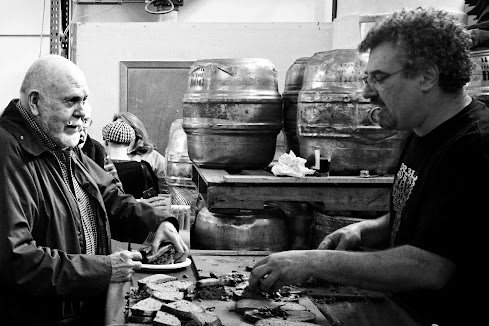
Fred Eckhardt shares a moment with Sprints. (Matt Wiater photo)
Hair of the Dog beers were always different. Even in the early days when Alan Sprints wasn't yet making the barrel-aged monsters he would become internationally famous for, the beers were unique. I suspect that was largely because they were made by hand on a small system. 

Sprints founded Hair of the Dog Brewing in late 1993. He had come to Portland years earlier to study at the Western Culinary Institute. He got hooked on brewing and honed his craft via the Oregon Brew Crew, an organization he led for a time. He also worked at Widmer for several years prior to launching Hair of the Dog. 

For 17 years, Sprints operated Hair of the Dog out of a warehouse in Southeast Portland. It was far off the beaten path and perhaps somewhat difficult to find for some. Sprints finally decided to upgrade. The result is the brewery and pub that opened on Southeast Yamhill in 2010.

Despite his time at Widmer, Sprints is essentially a home brewer who started a brewery. He steadfastly held onto the notion of brewing beer in small batches. He has used a tiny 4-bbl brewing system to produce his beers since the beginning.  

When I interviewed him for Portland Beer in 2013, Sprints told me his goal had always been simple: "l try to make beers I like, hoping others will enjoy them." His primary influences, he said, were the imports from Europe, especially Belgium, he drank as a young man. His second inspiration was provided by the early west coast craft brewers...Mendocino, Anchor and Sierra Nevada.  

Of course, Sprints would come to be heavily influenced and inspired by iconic beer historian and writer, Fred Eckhardt. An early Hair of the Dog beer, Adam (originally called Adambier), is a style that had ceased to exist until it was resurrected by Sprints. The idea for Adam occurred to Sprints when he heard Eckhardt speaking about beer styles that had fallen into extinction. 

Sprints and Eckhardt developed a cordial friendship and Sprints subsequently honored Eckhardt's contributions by adding Fred to his beer list. Then there was Fred Fest, a popular celebration of craft beer held yearly at Hair of the Dog on Eckhardt's birthday. That was generally a tough ticket. The future of Fred Fest would appear to be uncertain with HOD closing, though the 2022 event is set for May. 

Beyond the old world beers he resurrected, Sprints was a pioneer of barrel-aged beers and also of using local fruit in barrels. The idea of aging beer in spirit and wine barrels has become standard practice in modern craft brewing, but that wasn't always the case. Sprints was at the forefront of that movement.

“It’s nice to know my head was in the right place with barrel aging and that I was ahead of the curve,” Sprints said in 2013. “Aging Beers in wood is a challenge and can be good for your image.”

Hair of the Dog beers, because they have always been handmade, have had a tendency to vary in quality. A well-known flaw is under-carbonation, although there are others. Once upon a time, I bought a case of "bald" Fred, billed as a flat beer that would carbonate in time. But the beer failed to acquire any significant level of carbonation after years of cellaring. So it was used in stews and chilis with terrific results. 

Despite occasionally uneven beers. Hair of the Dog has been a beacon that attracted craft beer fans from around the world. When the brewery moved to inner Southeast, the appeal grew and it was regularly mentioned as a required destination for beer tourists visiting Portland. And it isn't uncommon to meet people from around the country and world while enjoying beers there. 

The impending closure of the brewery and pub is a blow to the local craft beer scene. Not because Hair of the Dog is an essential part of the current scene, but because of it's standing for so many years and because of the fact that Sprints influenced so many who came after him. Portland's beer scene was inoculated with Sprints' idealism long ago...and those ideals have spread.

When he closes up shop next summer, Sprints will retain the Hair of the Dog brand. That makes sense mostly because he IS the brand. Sprints will be officially retired, but he'll have control over what he decides to do with the brand. It will be interesting to see what that is. The pub and brewery will be sold, once he finds a buyer.

Godspeed, Alan Sprints. Your contributions to craft beer won't be forgotten.


Thursday, January 14, 2021

End of the Road for Portland Brewing

In the olden days of craft beer, one of the first beers that interested me was Bert Grant's Scottish Ale. It was available in Pullman, where I was in graduate school, and also one of the few craft beers you could get in a bottle at the time. There weren't that many around and most were draft only.

Of course, that Scottish Ale was one of the beers Portland Brewing began producing for the Portland market when it opened in March 1986. Contract brewing the Bert Grant beers helped get Portland Brewing off the ground. It gave them a reliable cash flow and, just as important, allowed them to tap into Grant's brewing expertise. 

When Grant increased the size of his brewery in Yakima, Portland Brewing lost the contract to brew his beers for this market. But the Grant beers lived on under different names with slightly tweaked recipes (note that Grant wasn't so sure about the tweaking). The Scottish Ale later morphed into McTarnahan's (the original spelling) Amber Ale, the brewery's most popular beer. 

If you're keeping track, Portland Brewing was the last of Portland's founding breweries to open. It was preceded by the short-lived Cartwright, Bridgeport, McMenamins and Widmer. Of those, only McMenamin's survives in more or less its original form. Cartwright lasted two years, Bridgeport closed in 2019 and Widmer (part of the Craft Brew Alliance) recently sold to Anheuser-Busch. 

We learned last week that Portland Brewing will cease operations in early February. The reasons apparently have nothing to do with the raging pandemic, which has caused widespread disaster in craft beer. That makes sense. Portland Brewing closed its pub two years ago and they were strictly production brewing here since. So its demise has more to do with the state of the industry than the pandemic.

High school buddies Art Larrance, Fred Bowman and Jim Goodwin founded Portland Brewing  The original pub on Northwest Flanders (most recently occupied by the now defunct Rogue) instantly became a popular watering hole and night spot. The space was too small virtually from the start and the brewery eventually moved to industrial Northwest in 1993. The problems began there. 


To finance the significantly larger pub and brewery, the founders sold common stock, They had done that since virtually the beginning and there were many smalltime investors who enjoyed owning part of something exciting. Benefits included a free daily pint. But not all investors were small. Local legend Mac MacTarnahan was a major investor. He gained majority ownership soon after the brewery opened in the new place. By 1998, the MacTarnahan name was used on all branding. 

A few years later, Mac was in failing health and so was the company. The MacTarnahan family, tired of pumping cash into a sinking proposition, sold Portland Brewing to Seattle-based Pyramid in 2004. Minority shareholders, including the founders, were shocked and disgruntled when they received pennies on the dollar for their shares while the MacTarnahan family sucked up the bulk of the proceeds. All's fair in war and business.

The real fun started in 2008, when Pyramid was acquired by Magic Hat. Magic Hat itself was acquired by North American Breweries in 2010. Then Costa Rica-based Florida Ice and Farm (FIFCO) bought North American Breweries in 2012. Sensing the error of the MacTarnahan's branding, the parent company changed the name back to Portland Brewing in 2013.

I always assumed the ownership changes and remoteness led to a muddled strategic vision. That judgment may have been incorrect. It's apparent looking at Oregon numbers (graph courtesy of Jeff Alworth) that Portland/Pyramid was growing its business in the immediate aftermath of the ownership turmoil. During a time when the craft brewery count was escalating rapidly and smaller breweries were beginning to lead the industry, Portland/Pyramid was apparently doing just fine.


The size of the brewery likely made that possible. When the founders moved to industrial Northwest, they installed a 130-barrel brewery. It was a costly leap of faith. They thought they would be brewing large batches of standards like MacTarnahan's for the pub and for distribution. The brewery could efficiently produce a variety of different beers in large quantities. Indeed, the size of the brewery is likely what attracted Pyramid and the other buyers. 

As the brewery count exploded and small batch, experimental beers captured the hearts and minds of craft drinkers in more recent times, Portland Brewing's large brewery became an anchor, not an asset. If they wanted to brew something, they had to make a lot of it. I'm guessing that's why they never really competed for drinkers looking for small batch beers. Instead, they relied on beers that sold well in grocery and c-stores, often at sub premium prices.   

Even though things were going relatively well in 2015, North American Breweries wanted more...or possibly realized what was coming. They hired Robert Rentsch as general manager of Portland Brewing/Pyramid. It was a newly created role and Rentsch seemed like a good fit. He had a solid brand building background at the Craft Brew Alliance, where he worked on the national expansion of Kona and helped launch Omission. 

I talked to Rentsch at the pub one afternoon over a beer. He hadn't been on the job long and wasn't sure or wouldn't say how he was going to attack it. The press release announcing his hiring was vague. It talked about creating a localized, community-based approach and building on the heritage of Portland Brewing and Pyramid. But that kind of approach wasn't really in Rentsch's wheelhouse. He had been successful expanding the reach of brands regionally and nationally. 

But I figured he was a smart guy and he'd find a way to make things work. Things clearly didn't go as he hoped. The brewery saw a decline in barrelage each year after 2014, until it finally hit the skids completely in 2020. When I visited the pub for a corporate event in the summer of 2017, I could tell that things were not going well. It was no surprise when the pub closed in late 2018. 

The impending closure of the brewery evidently means Portland Brewing's brands will soon be history. Production of FIFCO brands will move to New York and shipping beers from there to Oregon probably isn't in the cards. I suspect only MacTarnahan's would have any commercial value and perhaps someone here will gobble it up if and when the trademark lapses. That's what happened when Portland Brewing let the Portland Ale trademark lapse. Art Larrance snapped it up and started brewing it at Cascade. Could that happen with MacTarnahan's? Time will tell.

The demise of Portland Brewing effectively closes the book on the early craft brewing days here. For sure, McMenamin's carries on. But McMenamin's is known more for its grandiose properties and the events it hosts than it is for its beer. It's somehow fascinating to me that the big three will all have vanished on about the same 35-year timeline. Bridgeport, 1984-2019; Widmer, 1985-2019; Portland Brewing, 1986-2021. 


My memories of Portland Brewing, outside MacTarnahan's, are vague. I visited the original pub on Flanders only a handful of times after I arrived here in 1989. I spent far more time at Bridgeport during that era. My fondest memories of Portland Brewing include an Octoberfest celebration held in the area around the pub circa 1995-96 and also of going there for lunches and dinners in the 2000s. 

Besides being on the ground floor of the craft beer movement in Portland and Oregon, the most significant contribution of Portland Brewing and the other founding breweries is that they were a learning and proving ground for brewers and others who subsequently contributed to the industry's development in a variety of ways. 

So long, Portland Brewing. Thanks for the memories.


Monday, October 28, 2019

Lompoc and the Legacy Brewery Hex

Finishing up a week in Hawaii, I got a message suggesting that Lompoc Brewing was about to close. Two or three inquiries later, I learned it was all a vicious rumor, apparently started by irresponsible, fake news journalists and suspected communists.

A day later, the vicious rumor turned out to be true. Jerry Fechter was calling it a day and closing the Fifth Quadrant Brewpub, along with Sidebar. The Oaks Bottom Pub will carry on with Fechter at the helm, but it will remain a pub with no brewing and no connection to Lompoc. 

Fechter's collection of pubs had shrunk from five a few years ago to just three in recent times. Hedge House on Southeast Division closed two years ago and now houses Little Beast. Lompoc Tavern, formerly New Old Lompoc where the adventure started in 1996, closed in September 2018. 

When I was putting the final touches on Portland Beer in 2013, I included Lompoc on my list of the city's significant beer businesses. Laurelwood and Lucky Lab were the other two...the list being focused mainly on the multi-pub footprint of the three entities. 

These are all what we currently refer to as legacy breweries. I'm not exactly sure how to define "legacy brewery." Is that a five-year-old brewery? 10 years old? 20 years old? Or does it just need to be a brewery that has failed to keep up with the twists and turns of the market? You tell me.

The Lompoc story is fairly well-known. Fechter, a transplant from Ohio and wannabe brewer, worked at Old Lompoc Brewing in Northwest Portland for several years in the early 1990s. When he saw an opening, Fechter inquired about buying the business. During a round of golf.

Soon enough, the owners came back with a number. Fechter thought he could manage it, but realized he would need an investment partner to pull off the purchase and make needed improvements. That's when legendary Portland publican, Don Younger, entered the picture.

Don Younger tribute beer in 2013
Fechter and Younger mixed blackout drinking with business over a period of several months. They eventually hammered out an agreement whereby Younger became a partner in the business, but stayed mostly in the background while Fechter managed day-to-day operations.

It turned out to be a good match. Old Lompoc was renamed New Old Lompoc to signify the change in ownership and did well. Fechter and Younger later opened the Fifth Quadrant, Sidebar and Hedge House. Fechter also partnered with the late Jim Parker on Oaks Bottom Public House. After Parker exited and Younger passed away (in 2011), Fechter became sole owner of the businesses. 

As the list of brewery/brewpub failures grew over the past few years, many were left wondering which brewery might be next. After seeing Lompoc Tavern and Hedge House close, I added Lompoc to my "Most Likely to Fail" list. There was nothing diabolical about it. I always liked Jerry, who is one of the more jovial people you'll ever meet.

In recent years, I had several conversations with Fechter and with Mike De Kalb of Laurelwood about the difficulty faced by older, so-called legacy breweries. Probably the biggest challenge is that the people who follow craft beer tend to be attracted by shiny new breweries and beers.

Sidebar entry 2014
In the saturated beer market that is Portland, fads and trends are king. Customer loyalty is zero. Drinkers bounce from pub to pub and beer to beer with little thought, seeking the newest thing. That's why you rarely see a non-rotating tap at beer bars and pubs. Bad for business.

This is surely truer in a place like Portland, which is overrun with breweries and pubs, than it is in a rural setting like, say, Baker City or Yakima. The sheer glut of beer-centric businesses in Portland make it an increasingly difficult place to stay viable and relevant.

Add to overcrowding and fierce competition the fact that craft beer market growth is static or in gradual decline. That's bad news for everyone, including breweries that opened more recently, as they, too, will get old and be forced to deal with the challenges Fechter and De Kalb faced.

Laurelwood worked hard over the past decade to build brand recognition outside Portland. That's likely why, as things got tough, De Kalb was able to sell Laurelwood's intellectual property to Legacy Breweries, parent of Ninkasi. Laurelwood's core brands have value in regional distribution.

Lompoc was not in a similar situation. Its brands never gained the kind of following that would have attracted Legacy or a similar entity. Fechter had his collection of pubs and that was where he was going to live or die in an increasingly trendy, difficult market. We know things didn't work out.

I don't think Lompoc failed due to bad beer. Sure, their standards came off as a little flat next to the fancy stuff many breweries are pushing out in wrapped cans. But you could always find more interesting stuff on tap in the Lompoc pubs.

C-Note was a favorite of mine
What went wrong? It wasn't the food and service, which I always found decent. I suppose the beer could have been more exciting and certainly more visible in beer bars and taprooms, though that would have been difficult as competition stiffened. At the end of the day, I think Lompoc mostly fell victim to being old and less cool in a saturated sea of newness.

The last day is Tuesday, Oct. 29, when the Fifth Quadrant and Sidebar close for good. Fechter will hold a "garage sale” next Saturday, Nov. 2, at Sidebar from Noon to 5 p.m. Vintage Lompoc bottles, schwag, glassware and more will be for sale.

Fechter's trajectory? Untied from the Lompoc brand, he'll be free to build the tap list he could never have built at Lompoc. With no brewing, he'll focus strictly on the pub part of the business. Things may work out fine for him, though I doubt he's pleased with how it happened.

Farewell, Lompoc. Thanks for the memories.


Wednesday, February 13, 2019

Bridgeport Brewing: Anatomy of a Disaster

The idea to establish what became Bridgeport Brewing had its roots in the failure of the late Charles Coury's Cartwright Brewing. The ill-fated Cartwright, founded in 1980, was Oregon's first new brewery since Prohibition. It failed within two years due to sketchy, typically undrinkable beer.

Dick and Nancy Ponzi with Karl Ockert, 1984.
There's a chance Coury was simply 30 or so years ahead of his time. His infected beers might have gotten some traction in modern times, as sour beers gained a following. Or maybe not.

"Coury was his own worst enemy, the late Fred Eckhardt once said. "The last jolt was that his final batch was actually good beer, but it wasn't his fault. It was called Deliverance Ale and it had gotten infected just right so that it tasted like a Belgian ale, although he hadn't meant it to."

Nonetheless, a lot of people watched Cartwright, hoping it would succeed. The list included Dick Ponzi, a friend of Coury and a fellow winemaker. Ponzi knew a little bit about brewing and saw that Coury had the wrong equipment and used poor processes. He helped out with money and advice, but it was all for naught.

Ponzi believed there was a way to make good beer. He wasn't the only one. Portland's other founding brewers, including Kurt and Rob Widmer, Mike and Brian McMenamin and the threesome (Art Larrance, Fred Bowman and Jim Goodwin) that comprised the original Portland Brewing, saw possibility and were inspired to do better.

For Ponzi, the idea of starting a brewery surfaced in a serious way during the summer of 1983. He had just hired Karl Ockert, a recent graduate of the fermentation science program at Cal Davis, as an assistant winemaker. Ockert had conveniently taken the beer portion of the fermentation program on a whim, thinking it might help him stay employed...though there were few brewing jobs at the time.

From Ockert's first day on the job, Ponzi talked incessantly about starting a brewery. Ockert, ostensibly hired to help with winemaking, was amused, but also engaged and enthusiastic. Before long, the two had conjured up a plan to build a makeshift brewery.

Ockert (far left) and brewing staff (circa 1989).
Of course, no one was making small brewing systems in those days. Ponzi and Ockert, like Portland's other founding brewers, were stuck using old dairy equipment and whatever they could beg, borrow or steal. They had a small advantage coming from wine, where stainless steel tanks were in regular use. For them, building a brewery was largely a matter of plumbing and welding.

What was initially known as Columbia River Brewing opened in November 1984 on Northwest Marshall. The Ponzis (Dick and his wife, Nancy) arranged to lease about 6,000 square feet in the building for $600 a month. From an interview with the Ponzis conducted in 2013:
We approached [building owner] Roger Madden when we were looking to open a place. We wanted something with some character. We told Roger we just wanted a small space. He asked what we wanted to do. We said we were opening a brewery. He busted a gut laughing. He said, “How much space do you want?” So I laid out what we wanted and it wound up being $600 a month for something like 6,000 sq ft. The lease was written up and signed on the back of an envelope. Roger thought we were nuts.
Columbia River Brewing was a smash hit when it opened. The crowd that evening nearly drank the brewery dry. The first beer was Bridgeport Ale. Early beers included Bridgeport Stout, Blue Heron Pale Ale, Golden Ale, Pintail ESB, Coho Pacific Light Ale, Rose City Ale and Old Knucklehead Barleywine.

Prior to passage of the Brewpub Bill in June 1985, breweries could not sell beer directly to consumers. Instead, they had to go around to taverns, bars and restaurants and do tastings, hoping to win tap handles. Ockert tells great stories about brewing all day, then spending evenings doing tastings. That changed in a big way with passage of the Brewpub Bill.

Columbia River Brewing opened its pub in March 1986, the second brewpub in Oregon (McMenamin's Hillsdale pub was the first). It was not an instant success. They had no idea what to do for food. Cooking and prep facilities were limited in a space they really hadn't envisioned as a brewpub. Nancy Ponzi offered these comments in 2013:
We had some odd food choices…pickled eggs, pretzels, beer nuts, just crap. We had no kitchen so there wasn’t much we could do. We hired some people who helped develop the pizza recipe. We tried different things. We didn’t think we could make dough at first. Then we found a way to make dough that worked. And we perfected it…a three day process. It became legendary. We didn’t have a wood oven. We look back on that experience and realize the pizza was a stroke of genius. We used fresh, quality ingredients and it went over really well. There was almost no waste because we wrapped up everything that was left. No dishes because we used baskets and paper. We didn’t have to hire a bunch of help because we didn’t have table service. 
It was a combination of the beer, the pizza and the neo-grubby ambiance that established Bridgeport's pub as the standard against which others were measured. The area around the pub featured streets that were unpaved, pothole-riddled and virtually impassable in many vehicles. You'd park your car, open the door and step into a foot-deep crater. Charming.

When did they transition the name from Columbia River to Bridgeport Brewing? From the outset, all the beers had carried the Bridgeport name. When the pub opened, it was named the Bridgeport Brewpub. Soon thereafter, they moved away from the Columbia River name and it was eventually dropped. Today, few remember that it ever existed.

Landlord Roger Madden's likeness graced the label of
the first bottling of Old Knucklehead in 1989.
Anyone who experienced Bridgeport during its first decade can attest to the success story the Ponzis and Ockert created. It was a great place to go for consistent pizza and great beer and was often packed to the gills. As noted, the place became a sort of standard against which future brewpubs would be measured.

By 1995, the Ponzi's realized they needed to invest to modernize and expand the brewery if they were going to stay competitive in a market that was getting more competitive. But they had tired of the beer business for a variety of reasons, not the least of which was that they preferred the wine business. So they took the best of several offers and sold the business.

The sale to Texas-based Gambrinus, announced in October 1995, stunned Portland beer fans and others who knew and loved Bridgeport. Although it would take a while for the consequences of the sale to become clear, everyone needs to understand that Bridgeport, at that point, ceased to exist. All the decisions made subsequent to the sale were made in Texas, not Oregon.

This is where the current story picks up. At the direction of founder Carlos Alvarez, Gambrinus embarked on a strategy of making Bridgeport a national or semi-national brand. To attain that goal, Gambrinus thought it needed to strip away Bridgeport's Portland-centric identity. Doing so meant dropping some of the iconic beer names and making them more generic. Later, the pub underwent a dramatic remodel, rendering it significantly more trendy and upscale.

Some questioned the strategy. But Alvarez had experience in brand building. Gambrinus made its mark selling Grupo Modelo (Corona) to the eastern US and Texas beginning in 1986. A few years later, it acquired Spoetzl Brewing of Shiner, Texas and built Shiner Bock into a solid brand. Could Bridgeport be next? Inquiring minds wondered.

As some have noted, the disaster to come was obscured somewhat by the dramatic success of Bridgeport IPA, which appeared in 1996. Bridgeport brewers had been tinkering with an IPA recipe prior to the sale. On cue, Ockert returned from several years in exile (working for Anheuser-Busch and on other projects).

Ockert's contribution to the IPA was arguably crucial. He had experience running wort through dry hops at the end of the boil and suggested that approach with the IPA. It resulted in a beer that was low in bitterness, high in flavor and aroma. Bridgeport IPA eventually won several GABF medals and countless fans. Bridgeport didn't invent IPA, but it helped make it mainstream.

Of course, the IPA wasn't enough. The effort to mold Bridgeport into national brand flopped. The pub renovation, completed in 2006, shocked many Portlanders, who saw it as a monumental blunder. With much of its local identity stripped away and the beer portfolio in disrepair, Bridgeport's downward spiral ensued. This can be seen in the sales decline that began nearly a decade ago.

Faced with the failure of their national initiative, Alvarez invented a revisionist narrative based on what one might call "alternative facts." The basic contention, an appeal to the IPA craze, was that Bridgeport had always been about hops, always been focused on hoppy styles. It was a totally bogus claim that hit with a thud. The downward spiral accelerated.

The recent increase in the brewery count in Portland and beyond dealt Bridgeport another blow. Alvarez was slow to appreciate what the tsunami of small, local breweries meant. While beer fans were seeking innovative beers from small breweries, Bridgeport continued down the road of producing generic styles that sought broad appeal. Oops.

Finally seeing its mistake, Gambrinus launched an innovation program at Bridgeport. This happened within the last two years, very late in game. Reliable sources say the innovation program produces some great beers. I don't doubt it. But the effort was five years late. The beers had little effect because the brand had collapsed and the desired audience had given up on Bridgeport.

You simply cannot underestimate the impact of strategic bungling and detached management. Alvarez took a valuable brand and collapsed its value entirely. As announced the other day, the brewery has stopped production. Since no one has come forward to purchase any of the brands, they will soon vanish. The brewery will be sold. And when the pub closes on March 10, Bridgeport will be nothing more than a memory.

Let's be clear: This disaster is not the fault of the brewery workers who've been let go or the pub workers who soon will be. They were pawns, pushed and bullied around for years by people who supposedly knew what they were doing. The blame for this mess rests squarely on Carlos Alvarez and the bunglers at Gambrinus.

So long, Bridgeport. Happy trails. You were once loved by many.

Friday, November 16, 2018

Lloyd Center Eyes Future with Migration Burger Shack

Lloyd Center Mall has been in gradual decline for most of the last 15 years. That's not really a secret and there are a variety of reasons. But there are efforts underway to transform the place for the 21st century. Migration Brewing's Burger Shack pop-up is part of that strategy.

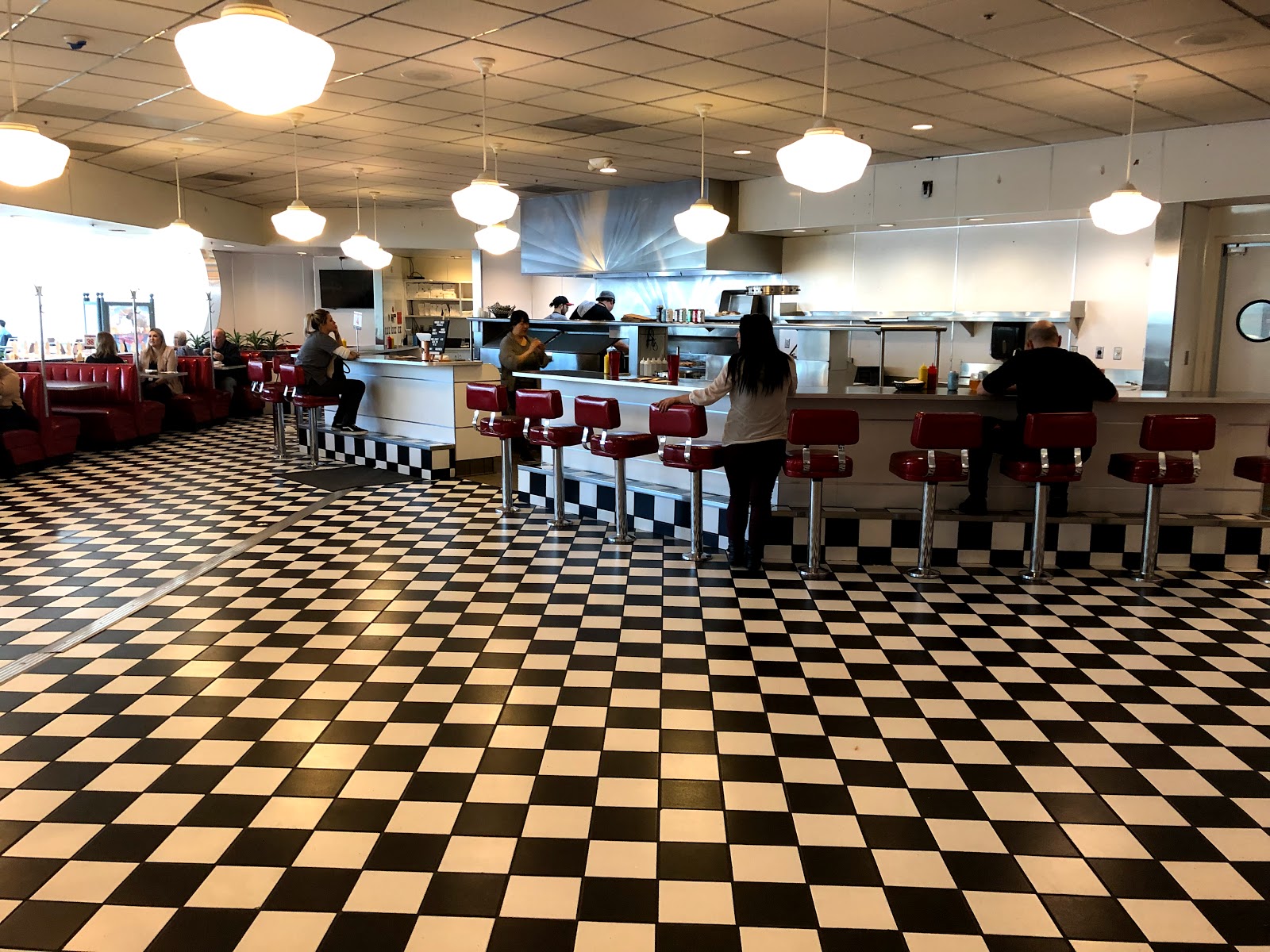
The Burger Shack opened this week in the third floor food court area in the space formerly occupied by Billy Heartbeats Diner, a 50's-style eatery. It features cheap eats alongside craft beer from one of the area's aggressively expanding brands. This is billed as a temporary arrangement, lasting through the holidays. We'll see.

Migration, if you aren't aware, has been kicking around the local scene for a number of years. The original location on Northeast Glisan features a popular outdoor patio and practical pub. The second location, opened earlier this year, is a pub and production facility in Gresham. These guys are bigly on growth.

The pop-up menu is pretty dumbed down, perfect for frantic holiday shoppers who need a bite to eat and a break from shopping. The Classic Burger with fries and a soda costs $10. The same items with a beer go for $11. Not bad, eh? They also offer a Double Classic, a Veggie burger and a Fried Chicken sandwich, as well as some sides.


For beer, they're leaning on canned product made in Gresham. They had several choices when I stopped by on opening day. There are also wine and cider options on the board. Ideally, you'd like to see draft beer in a place like this. But that apparently isn't part of the plan for now. It's understandable if the situation here truly is temporary.

Whether the Burger Shack is permanent or temporary, it's a smart move. Migration, which isn't the  household name it might like to be, exposes its brand to a general audience that's more likely to buy beer in stores than hardcore beer fans. With the brewery expanding production and finding spots on more store shelves, the timing is ideal. Marketing 101, you might say.


This a win-win for the mall, as well. They're adding another food option for mall patrons to visit during the high traffic holiday season. Plus, this is the kind of place that will appeal to millennials who like craft beer, but aren't necessarily fans of mall culture. That's probably especially true of Lloyd Center, which has lost some luster and gotten some bad press in recent years.

When it opened in 1960, the mall was widely regarded as one of the best in the country. It has undergone several significant facelifts over the years, the most significant of which was (arguably) covering and enclosing it in the early 1990s. I've belonged to an athletic club across the street from Lloyd Center for 30 years and I've watched some of the changes happen. I've also seen the decline in holiday shopping traffic.


Developments over the last decade or so haven't been especially positive. The growing popularity of Amazon and online shopping in general has crushed traditional retail. Lloyd Center lost anchor tenants (Nordstrom and Sears, for example) and many smaller, non-chain stores. Its movie theater closed years ago. A number of vacated storefronts were in evidence on my visit.

But all is not lost. Mall owners launched a $50 million renovation project several years ago. They've made progress, though much remains to be done. The reimagined mall will place less emphasis on anchor tenants and more on lifestyle concepts and artisan shops. Drawings show a modern movieplex, a fitness center and other modern amenities. On the flipside, a vintage spiral staircase with terrazzo columns recalls the mall's early, open air days.


The Lloyd district itself has undergone a dramatic transformation in recent years, with residential high rises and street-level shops. There's more of that on the way. The updated mall, although it will certainly look to attract visitors from outside the area, will strive to serve the burgeoning residential clientele that lives or will live within walking distance. There are still questions about what the final form will be, but it's sure to be interesting.

As I think about what Lloyd Center might be, I can easily see it housing a couple of pubs and maybe even a brewpub. That scenario would fit with the goal of serving the local residential community, as well as patrons drawn from outlying areas. Whether the Migration Burger Shack is an experiment or the leading edge of what's coming, it makes a lot of sense. The future is now.


Sunday, June 24, 2018

At Last, Deschutes Opens a Pub at PDX

Thirty years after opening its doors in Bend, Deschutes Brewing marked the grand opening of a pub at Portland International Airport with snacks, toasts and a ribbon cutting ceremony on Friday.

The opening coincides with the 30th anniversary of the airport's Clocktower (located in the pre-security area). On Friday, there was a free beer tasting featuring some of the brews available at the airport. The tasting was part of a series of events planned this summer to honor the Clocktower.

Deschutes founder Gary Fish was on hand for the ribbon cutting. He spoke briefly to a small crowd of accidental tourists, media folks and officials connected to the brewery, the airport or the concessionaire company that operates essentially all of the businesses at PDX.

This is the second Deschutes location in Portland, following the opening of the brewpub in the Pearl District by 10 years. Fish highlighted the reasons why he and others at Deschutes Brewing have always regarded Portland as its most important market.

"Portland is the most important beer city in America," he said. "It has the largest craft beer market share of any city in the country, and it's our single largest, most important market. We focused on Portland almost from the beginning and the pubs here are a continuation of that effort."

The pub is a nice addition to the offerings at PDX. It's located in Concourse D in the space previously occupied by Rogue. In reimagining the look, they created a visually open and bright space. This is the kind of place travelers will appreciate. Success is likely to come pretty easy.

That was less the case back to 2008, when the Pearl District brewpub opened. It was a sketchy time. The Great Recession was in full force and the pub struggled initially. But it did well enough to survive and has flourished in a community that embraces the Deschutes brand.

To me, Deschutes is one of Oregon's most iconic brands, maybe the most iconic in beer terms. Most of the state's early craft breweries are no longer locally owned or they've jumped the track in other ways. Yet Deschutes stayed the course, always featuring quality beer, food and service. While remaining independent.


The story is nicely told in Jon Abernathy's fine book, Bend Beer: A History of Brewing in Central Oregon. In fact, Fish wound up in Bend more or less by accident. He wanted to open a brewery in Northern California. Competition and cost caused him to look elsewhere. His parents, fresh from a trip to Central Oregon, suggested he give the area a look. He liked what he saw.

You might think the rest is history, but there you'd be wrong. Despite the current size and reach of Deschutes Brewing, the operation in Bend was not a slam dunk success. There were growing pains early on and business was not always good.

"You could shoot a gun off in [the pub] a lot of nights and nobody would notice," Fish is quoted as saying in Abernathy's book. Some nights he sent employees home and ran the pub alone things were so slow. Fish chuckled and verified the accuracy of those comments on Friday.

Why did Deschutes finally open a pub at PDX? That's an interesting question. Fish described it as a long term project. Okay. As one of the most prominent craft beer brands in the state, I suspect Deschutes could and maybe should have established a presence at the airport long ago. Why now?


The answer is likely related to the overall state of craft beer. Large craft breweries like Deschutes are losing market share, particularly in distant markets. They helped create a demand that is today being increasingly filled by small, local breweries. Ironic turn of events, for sure.

As a result, larger breweries are turning inward and intensifying marketing efforts closer to home. We're seeing this in Portland with Widmer, Bridgeport and Portland Brewing, each of which is putting significant effort into reconnecting with local fans via specialty beers and events.

Deschutes situation is a bit different because they never really abandoned the specialty beers so many fans are chasing these days. For them, the airport pub will serve as a great marketing piece, a way to connect with and make an impression on travelers who are coming and going.

It seems like a smart move to me. I look forward to visiting the next time I'm in Concourse D.

Wednesday, December 6, 2017

Fat Heads PDX will Transition to Von Ebert Brewing

There will be another "new" brewery in Portland early next year. Fat Heads Brewing, launched in 2014, will close in January. It will be replaced sometime in the first quarter of the year by Von Ebert Brewing, which will be operated by current Fat Heads franchisee, Tom Cook.

When news of Fat Heads closure hit beer media email boxes and social media Tuesday evening, a lot of people wondered why the apparently successful brewpub would close. In fact, the closure has nothing at all to do with the business here.

What's actually at work is that corporate Fat Heads, based in Ohio, has a lot going on in its home market. Rather than continue to focus on its remote Portland outpost, the company and Cook mutually decided to end the franchise arrangement.

"I know it sounds like spin," Cook said via email. "But that's exactly what happened. They wanted to focus on the Midwest, where they have a lot going on with a new production brewery and the new Canton brewpub. I wanted to focus on Portland. We decided it's probably best for them to continue in the Midwest and for me to do my own thing out there."

He admits it wasn't an easy decision. The franchise has been highly successful here. Indeed, the success of Fat Heads surprised more than a few in the beer geek crowd. Many thought an out-of-state chain would quickly collapse in beer wacky Beervana. Didn't happen.

"I think we succeeded here because we built a great team and gave it the right tools," wrote Cook. "There's no way I would be doing what I'm doing with Von Ebert if my team here wasn’t staying and fully behind me. This wasn’t an easy decision, but I think it's the right decision for everyone."

Von Ebert, when it opens, will specialize in hoppy brews from Head Brewer, Eric Van Tassel. Sean Burke, formerly of The Commons, is also part of the Von Ebert Brewing team. Burke's talent for brewing uniquely interesting beers is well-known. Cook expects they will release 100 or so unique beers per year, including American, German, Belgian and barrel-aged beers.

"Von Ebert Brewing is a new concept, where northwest family traditions meet bold new ideas in craft brewing,” said Cook in a press release. "We’re excited to unveil a completely new experience for customers, blending our brewing expertise with the adventurous flavors Portland has come to love."

The pub will feature what he refers to as "elevated American pub food." Items will include traditional German pretzels with beer cheese, stone-oven-baked pizzas, cheeseburgers stacked high with locally sourced meats, decadent sandwiches and smoked wings.


"True to our character, our menu will combine classic pub fares with the kind of top-tier quality, local ingredients you can only find in Portland," Cook said.

Those in the know are aware that Cook had quietly planned to open a brewpub in the vacated Ringside Steakhouse space adjacent to Glendoveer Golf Course in east Portland. Evidently, those plans will be more or less on hold until he clears some regulatory hurdles.

"There's more to come on this," he wrote. "I don’t want to comment or give a timeline until I finish with the City of Portland. I would hate to promise something and then learn we can’t do it."

If you're like me, you wonder about the Von Ebert name and logo. There was nothing about its origins in the press release announcing the plan. So I had to ask.

"My great grandmother came to the United States from Germany and her last name was Ebert," Cook wrote. "She gave up quite a bit in Germany to bring my family here, so I wanted to pay some respect to my immigrant family. "Eber" in German means boar, thus the boar in the logo."

Good answer.


Monday, November 20, 2017

The Fate of Hedge House and More

Yesterday's news that Lompoc's Hedge House in Southeast Portland is closing comes on the heels of last week's featured stories regarding the overnight closure of Widmer's Gasthaus and the final day of operation at The Commons. The last day at the Hedge House will be Nov. 28.

The announcement was met with shock. Maybe it shouldn't have been. We've been cruising along in unlimited craft beer growth mode, watching countless places open and assuming there was room for everyone. Market saturation is today's reality. And there is a price.

During last week's media preview of Lompoc's holiday beers, with the Widmer news fresh, I asked owner Jerry Fechter about the challenges presented by growing competition and saturation in the restaurant and pub business.

The reality, he said, is that all the Lompoc pubs have been affected by the seemingly endless number of similar businesses that have opened around the city. There's no longer any limit on how many places can open in a given area. He made no mention of impending closures, but confided that the situation had him frustrated and worried about the future.

As we were reminded in the press release announcing its closure, the Hedge House resided in a quaint and underdeveloped location for many years after it opened in 2003. It wasn't fancy and it was beloved by many precisely because it was a simple place where you could relax with your friends, your family or your dog.

In fact, the Hedge House surely benefited by being in a sort of rundown area where rents were cheap. That was a common theme in Portland craft beer for several decades. Southeast Portland and what is now the Pearl District were once littered with vacant warehouses and busted up storefronts perfect for breweries and related businesses. It's flipped now, of course.

As the area around the Hedge House was flooded by a virtual tsunami of trendy bars, restaurants and related establishments, sales slowed and its prospects dimmed. Even if it had been idyllic in terms of service, food and beer, the Hedge House was an old school place ill-prepared to compete with the barrage of fresh new choices.

The situation we face is odd. After several years of double-digit growth, craft beer will likely see low single digit growth for 2017. Yet new breweries, pubs and taprooms continue to open. There isn't room for everyone. Established places like the Hedge House appear to be at greater risk than shiny new joints that are more marketable to the young crowd that spins craft beer's disco ball.

There's no way to change course. The market will sort out which places will survive and which ones won't. I think older, established spots are most vulnerable, though poorly run newbies aren't immune to market forces by any means.

Sunday, April 23, 2017

Little Beast Sets Up Shop in Beaverton

One of the most anticipated brewery openings in recent times became official Saturday evening. Little Beast Brewing, the creative child of Charles Porter and his wife and partner, Brenda Crow, held a launch party at OP Wurst in Southeast Portland. A fine time was had by all.

I'll get to the Little Beast details shortly. This was a significant event because Porter has a rich brewing background. He co-founded Logsdon Farmhouse Ales with David Logsdon in 2009, then abruptly departed a couple of years back. It took some time to get Little Beast off the ground. Porter lives in my neighborhood and I got vague updates on the project from time to time.

Breweries open every day. You know this. Little Beast is special because Porter doesn't make typical beers and his beers have won awards in significant competitions. His particular talent is producing mixed culture brews that lean on local produce and micro-flora. Barrel-aging and bottle conditioning are part of that, obviously.

In fact, the Little Beast name itself is nicely conceptualized. How so? Because it's the "little beasts" in micro-flora that ferment the farmhouse and wild ales Porter is known for. A degree in biology provides him with an understanding of yeast and bacteria, handy stuff to know if you're going to monkey around with wild and sour beers.

There's a significant and growing interest in these beers. Cascade Brewing has built an empire on its sour beers. DeGarde in Tillamonk has done well with its wild ales, as has Wolves and People out in Newberg. There's also Yachats Brewing, where Charlie Van Meter, who worked with Porter at Logsdon, is producing some uniquely unconventional beers.

Little Beast will for now operate out of the former Brannon's Pub & Brewery in Beaverton. They're occupying the brewing space there while Westgate Bourbon Bar and Taphouse operates the pub portion of the space. This is a relatively inexpensive way to get the brewery up and running and to build a following. A taproom somewhere in Portland is in the future.


Samples of Bes, a tart wheat ale, and Fera, a brett-fermented Saison, were poured at OP Wurst. Porter also shared a few bottled beers around. Everything was pretty tasty. I preferred the Bes to the Fera, but that was a tough call. Many liked the Fera.

Little Beast will offer year-around flagship and seasonal beers in draft and bottled form. Limited, exclusive stuff will evidently be sold direct via some sort of membership. I'm guessing the standards will show up intermittently in area beer bars and bottleshops. There's a tentative list of shops and bars coming and I'll update this post when/if I receive it.

I expect Little Beast to do well. They have a premium product that's somewhat unconventional and Porter is no stranger to brand building. But these are strange times in craft beer. It's getting crowded out there. Nothing comes easy. Porter and Crow know this.


Monday, July 6, 2015

Portland Craft Beer Hall of Fame: My Inaugural List

We are a week into Oregon Craft Beer Month. As usual, there's an ongoing barrage of beer festivals, release parties and related events. It hasn't always been this way. There was a time not so many years ago when we didn't have daily beer events, even in July. The thought takes me back.

This past weekend marked the first Portland Craft Beer Festival, held at Fields Neighborhood Park in Northwest Portland. I didn't attend. But I see they chose and announced five inaugural members of the Portland Craft Beer Hall of Fame on Saturday.

Just so we're clear, there is no physical Hall of Fame or wax busts at this point. The Hall of Fame is a paper list. I suppose we'll have a physical HOF when someone (or some group) agrees to pay to have it built. Also, I have no clue how the selection process worked. There's no information on the festival site or anywhere else that I can find.

The first five names probably aren't going to raise too many eyebrows: Henry Weinhard, Fred Eckhardt, Kurt Widmer, Rob Widmer and Don Younger. Naturally, I have my own ideas about what that list should look like. And why.

Henry Weinhard
One of the reasons Portlanders were receptive to the early craft beers is the beers were local and they had the experience of drinking local beer thanks to Blitz-Weinhard Brewing, established in 1856. Early craft brewers also benefited from the expertise of the brewers at Weinhard.

Weinhard Brewing, under the direction of Henry's great grandsons Fred and Bill Wessinger, produced what was arguably Oregon's first craft beer,..Henry's Weinhard's Private Reserve in 1976. The Wessingers came up with the idea because they saw a niche in super premium beer that had been largely abandoned by big beer. They figured Private Reserve could be successful in that niche...and they were right. Craft brewers would later build on that theme.


Fred Eckhardt
If you look through the pages of the Oregonian from the 1980s, you'll find beer-related articles by several writers. The first craft brewers were getting started and there was interest in the new industry. Fred Eckhardt became the face of the paper's beer coverage at a time when few media outlets had any interest. That coverage became a sort of guide to what what going on.


Eckhardt's reports were often packed with information that would challenge the attention spans of modern beer fans. He discussed the origins of different styles and how they were made. In fact, Eckhardt had written several books on beer and beer styles and his influence extended to brewers. Whenever he wasn't satisfied with what was going on, he would head down to a brewery and badger brewers to make something new. He became an icon and remains one to this day.

Charles Coury
How do you evaluate the impact of a failure? Tough question. Charles Coury, a winemaker, founded Cartwright Brewing in 1980. His brewery was plagued with problems. He didn't have the right equipment to succeed. Sanitation was huge a problem. Then he took on the ill-advised challenge of bottling. There aren't many who remember his beer and speak of it fondly.
Cartwright lasted less than two years, closing at the end of 1981. But there were a lot of people rooting for its success. When the brewery closed, the idea of producing a quality beer lived on in the minds of the early brewers. They realized Coury's failure was in execution, not concept. Some will argue Coury doesn't belong in the Hall of Fame because he was a flash in the pan. The problem with that view is this: Cartwright is where the craft revolution started here.

Dick and Nancy Ponzi
The Ponzis are the most important of Portland's original craft brewers.They founded Bridgeport Brewing (initially known as Columbia River Brewing) in 1984. In fact, Bridgeport is the only Oregon craft brewery that sold any beer in '84. Don't downplay their legacy because they sold Bridgeport to Gambrinus in 1995. Their influence was significant and long-lasting.

The Ponzis were friends of Coury and saw what he was doing, even helped him with equipment and money. After Cartwright went under, Dick Ponzi took on the challenge of making good craft beer to prove it could be done. He applied his engineering expertise to building a brewery that wasn't prone to the kinds of problems Coury experienced.


There's also the brewpub factor. Brewpubs got craft beer out of the shadows and exposed it to the masses. Of the founding brewers, the Ponzis were the most crucial to the brewpub legislation. Why? Because they had the wine tasting room experience. If you could sell wine to patrons in a tasting room setting, they reasoned, why shouldn't craft brewers be able to do the same thing? It was a strong argument and one that eventually helped get the legislation through.

Of course, the Ponzis weren't the first to open a brewpub after the Brewpub Bill passed in June 1985. But their pub on Northwest Marshall, where they served their ales alongside some pretty good pizza, set the standard by which brewpubs here were measured. Even today, I can see Bridgeport's influence in almost all of the city's better brewpubs.

So those are my inaugural members of the Portland Craft Beer Hall of Fame, based mainly on the influence they had on the movement as a whole. My nominees for next year: Mike and Brian McMenamin, Don Younger, Kurt Widmer, Karl Ockert and Art Larrance.

Tuesday, December 16, 2014

BTU Brasserie: Alternative to Traditional Brewpubs

When it opened last summer on Northeast Sandy Blvd, BTU Brasserie was a much-anticipated addition to a strip that is dominated by Asian-themed eateries. Combining Chinese cuisine with a brewery is a pretty unique concept and one that may have traction with folks bored with standard brewpub fare.

Frankly, I believe offering an alternative to traditional pub fare is a great idea and one that makes a lot of sense around here. Food, whether better or just different, is a great way to differentiate yourself in a city xthat is virtually overrun by brewpubs and craft-centric restaurants.

In the case of BTU Brasserie, the folks running things have significant experience on the culinary side. Co-owner Nate Yovu served as head chef at Burnside Brewing and also has training and experience as a brewer. One of his partners, Chris Bogart, has a strong culinary background and also worked at Burnside. Nate's brother, Jay, has homebrewing experience and assists with the brewing program.

It's certainly fair to say these guys have a greater depth of experience with food than they do with beer. That's probably what accounts for the beers being what they are. And what they are isn't bad. But I believe there's a difference between brewers who brew for standalone drinkers and those who brew mainly to enrich or complement a restaurant menu.

For example, Fire on the Mountain brews beers that are largely designed to fit with the hot & spicy food they serve. So they have some beers that are intended to put out the fire, so to speak. That isn't all they have, but it is a definite focus. These beers aren't often seen outside FOTM locations.

An alternative example is Laurelwood, which features mostly standard pub fare and brews a variety of beers. Some of those beers cater to non-beer geek patrons. But Laurelwood also brews standalone beers like Workhorse, that bring people into their pubs and are regularly poured at various watering holes around town.


The Beers
When I walked into BTU last summer, they were in the middle of renovating the space. A brand new 7-bbl brewhouse was in place, though it appeared they were a month or more from opening. When I returned a couple of months ago, they had only two of their beers on tap. I resolved to come back later when they were up to speed with the brewing.

Having recently received word that they were now pouring seven beers, I resolved to stop in. Early Saturday evening proved the perfect fit.

First things first. The cost of a seven beer taster flight at BTU is just $7. And these are solid 4 oz pours, so nothing to shake your fist at. This is a good deal and what you should expect to pay for this much beer. Too many places jack up prices to discourage taster flights, which are admittedly a bit of a pain is the ass.


BTU's flagship brew (from the beer menu) is BTU Lager, an amusing little beer that clocks in at 5.5% and 22 IBU. It's brewed with Chinese short grain rice and filtered. This beer is clear, clean and crisp. It also lacks significant character. If it hadn't been under-carbonated, I might have mistaken it for Coors Light. I suspect it's their flagship because it goes well with the food.

Rusty's Red is another one of their popular beers, at 5.8% and 52 IBU. It's billed as a generously hopped American Red Ale. It seemed coarsely bitter to me. Maybe it could use a little residual sweetness. Out For a Rip IPA fell into the same category. Its numbers, 6.4% and 55 IBU, aren't big compared to other IPAs out there. But it struck me as being intensely bitter with almost no hop aroma or flavor. It reminded me of the IPAs I made 15 years ago as a home brewer, in which all or most of the hops went into the boil. Those days are gone and I think these beers need some work.

It gets better. Dark Helmut Schwarzbier (6.3%, 28 IBU) is a nice representation of the style. It's smooth and mildly roasty. The name may not fit with the Asian theme, but the beer works perfectly with some of the food. There's also Sandy Blonde (5.4%, 25 IBU), a golden ale featuring Cascade hops, that works well. Polaris Wheat (5.4%, 34 IBU), named for the Polaris hop, is a mildly bitter rendition of the style. I think it probably pairs nicely with some of the spicier dishes here.


The outlier on the beer list is Joulupukki Festive Bock (5.8%, 16 IBU), a holiday beer spiced with pumpkin, peppercorns, fresh ginger, star anise, cinnamon, orange peel and coriander. The spicy character of Joulupukki is pretty subtle and gets more pronounced as it warms up. I'm not sure where it fits in with the theme or the food, but it's worth trying.

Thoughts
It seems to me the BTU folks have succeeded in producing beers that complement the food experience there. The owners, I suspect, are still in the process of figuring out their brewing system and tweaking recipes. The beers will evolve. They will get better and there will be even more variety going forward.

There was talk early on of distributing kegs. As it stands, there isn't  a BTU beer that would have much traction in a taproom, pub or growler fill station. These aren't standalone beers. If I were going to pick one to market outside the restaurant, it would be the Schwarzbier. Why? Because it's a well-made beer and there aren't a lot of competing dark lagers out there. Just saying.

The bottom line with BTU Brasserie is this: It isn't a place you're going to go strictly to have a beer, although it may well become a beer destination down the road. For now, it's a place you're going to go to have lunch or dinner and a beer. Because it seems to work really well on that level.


Sunday, November 30, 2014

The Commons Gathers Around Third Anniversary

Times flies when you're having fun. And they've been having fun while making good beer at The Commons since 2011. They're holding a party to celebrate their success this coming Saturday, Dec. 6, at the brewery on SE Stephens.


When Mike Wright decided to start this place three years ago, he had no idea how successful his little business would be. Today, The Commons has earned widespread respect for its line of Belgian-influenced beers, some of which have won medals at the World Beer Cup and GABF. Their beer is widely available at stores, restaurants and finer watering holes in Portland and beyond.

There are those who think opening a brewery is the secret to great wealth and adoration. But building a brand in the hyper-competitive craft beer marketplace is an arduous task, even if you have great beer. Wright and his compatriots, Josh Grgas, Sean Burke, Travis Sandoval and others, have leaned on their expertise and a lot of hard work to make The Commons what it is.

Wright at the 2012 celebration
This year's anniversary celebration will be the last in the brewery on Stephens. As most who read this know, Wright and Co. have been diligently working on a new and significantly larger space on SE 7th and Belmont. They hope to be open there by the spring, though they are realistic enough to know these things don't always happen the way you plan.

There will be no bottleshare this year. That had a been a prominent and well-attended event the past two years, and will return once they are in their new space. It seems the current landlord is uncomfortable with use of the common areas in the building. That's unfortunate, but somehow understandable given the appeal of these events.

Regardless, the beer list for their Third Anniversary is really fantastic.

Opening Taplist
  • Urban Farmhouse: The flagship saison has been on tap #1 since the day the brewery opened.
  • Buckwheat Grissette: Belgian table beer with Buckwheat and Brettanomyces.
  • Trillium: Blended farmhouse ale aged in Pinot Noir barrels with Brettanomyces Bruxellensis, Brettanomyces Lambicus and house grown cultures.
  • 3rd Anniversary Stout: Imperial Stout featuring 10 different malts aged in Bourbon barrels previously used for Bourbon Little Brother and Brotherly Love. 
  • 2014 Bourbon Little Brother: Sneak preview of their popular winter bottle seasonal. Belgian Dark Strong Ale partially aged in Bourbon barrels. 
  • 2014 Maybelle: Farmhouse ale aged in wine barrels with BSI’s Brettanomyces Bruxellensis variant Drei.
  • Putin from the Wood: Baltic Porter aged in Bourbon barrels.
  • Pils: Northern German Style with Perle and Spalt hops.  
5:00 PM Taplist
  • Gin Enkel: Possibly the last keg of one of their most popular beers. Belgian table beer with spelt and rye aged in fresh Old Tom Gin barrels with apricots. 
  • Dark Czar: One off Baltic Porter/Imperial Stout blended with Stumptown Guatemala Finca el Injerto coffee and vanilla beans.
  • …plus a special to be announced keg from a friendly Midwest brewery. 

The party gets underway at 2:00 p.m. and will run through 9:00 p.m. or so. Obviously, this isn't the only beer event in the city this weekend, but it will be a good one. You aren't going to have a better opportunity to Gather Around Great Beer, a slight modification of The Commons tagline. Come toast the success of this humble brewery.

Celebrating three years

Thursday, November 20, 2014

Breakside Highlights Special Releases, Library Flights

The last time I mentioned Breakside Brewing here was last December, when I said there were my brewery of the year for 2013. That comment was based mostly on the fact that they had created some truly amazing specialty beers to go with some terrific standards, like their IPA and Pilsner.

Head brewer Ben Edmunds and his team have continued to build on that theme in 2014. The production brewery in Milwaukie has enabled them to do large batches of the popular standards, which you can find almost anywhere at reasonable prices. Meanwhile, smaller batches of seasonals and funky, barrel-aged specialty beers are showing up, too. I'll get to those shortly.

Looking at OLCC numbers, and keep in mind that these are Oregon-only numbers (limited to beer made and sold here), Breakside's overall production is rising. For all of 2013, they produced 3,178 barrels. Through August of this year, they produced 3,521 barrels. If monthly trends hold, they will easily pass through 5K barrels by the end of the year. As noted, these numbers do not include out-of-state sales, which are increasing.

Of course, rising production numbers suggest a strong following. Breakside bumped up the buzz in that area by winning two medals at the 2014 GABF. Breakside IPA took gold in the American Style IPA category and Wanderlust IPA won bronze for American Strong Pale Ale. Lots of good news at Breakside.

And there's more. Edmunds and his brewing elves have made great progress, but they continue to forge ahead with the release of new specialty beers and a new rare beer tasting program at their Milwaukie Brewery and Taproom. Below the details:

La Tormenta (dry-hopped soul ale): 7% ABV, 22 IBU
An experimental ale that combines a mildly tart base with a tasty and aromatic blend of tropical, fruity hops. Notes of grapefruit and lemongrass are present. This is a fantastic beer. No wonder it's one of Breakside's most popular small batch beers of the year. It will be available on draft and in bombers. The Portland release party happens tonight (11/20) at Beermongers, where they will have a flock of Breakside beers on tap.


Imperial Red: 8% ABV, 93 IBU
This is essentially an Imperial Red IPA and has enough backbone to offer a nice alternative to standard winter beers. But it's the aroma and flavor provided by Simcoe and Amarillo hops that make this beer special, with notes of pine resin and grapefruit. Imperial Red is so smooth you won't even notice the added alcohol, so watch it. This is a draft only release and you'll find it at Breakside and select locations. It's disappearing quickly, so get it now.


Country Blonde: 7.2% ABV, 27 IBU
A wheaten saison conditioned on Gewurztraminer grapes and a blend of wild yeast and bacteria that includes three strains of Brettanomyces and Lactobacillus. I tasted this beer, along with Imperial Red and La Tormenta, at a Tuesday night media event. It is excellent. Country Blonde will be available only in bottles probably limited to Breakside locations.

Rare & Vintage Beer Library Flights
Getting a chance to taste older vintages of specialty beers, particularly flights, is great fun. You get to appreciate how beers have aged and evaluate sometimes quirky flavor profiles. This type of tasting has become increasingly popular in recent times.

To address that demand, Breakside is launching Rare and Vintage Beer Library Flights at their Milwaukie location starting Dec. 5. Flights will be 5 oz pours (three for $9 or $3 each). Choices will vary and only include beers not available on draft. The Library Flights program will be run Friday through Sunday. Check Breakside's social media feeds for weekly updates on beers.

Once again, Breakside is setting a high standard for great beer and business smarts. They obviously aren't the only ones doing good work here, but it seems to me things are looking especially bright at Breakside.